Magnesium Oxide Powder Calcination Line Shipped to Russia
ZK CORP's Intelligent Manufacturing Enters the International Stage with New Success in Overseas Cooperation
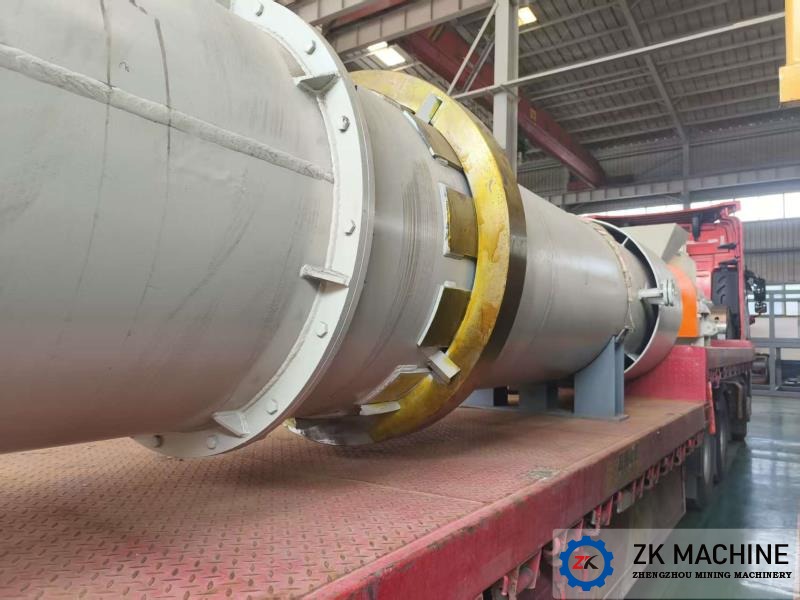
Recently, the pilot-industrial line for magnesium oxide powder calcination was successfully loaded and shipped to the customer in Russia. Henan Zhengzhou Mining Machinery Co., Ltd. (hereinafter referred to as ZK CORP) has once again demonstrated its high standards on the international market. This project serves as confirmation of ZK CORP's recognized technical competence and service capabilities in the field of high-temperature material calcination and comprehensive waste recycling.
01. From Inquiry to Solution Confirmation – Trust Earned Through Prompt Response
Two years ago, the Russian customer first contacted ZK CORP with a request for developing a pilot line for magnesium oxide powder calcination. Upon receiving the inquiry, ZK CORP immediately organized a technical team to analyze the material properties and the customer's technological requirements, then promptly prepared an initial solution and initiated negotiations.
Thanks to an effective international technical communication system, the two parties reached an agreement on the technological process, equipment layout, production capacity, heat utilization method, and other key parameters in a short period, laying a solid foundation for the project's launch.
02. Factory Inspection and Trust Strengthening – Recognition of Technologies and Corporate Potential
Shortly after the start of negotiations, the customer visited ZK CORP's headquarters and production base. During the visit, they gained a detailed understanding of the production workshops, machine tool fleet, and test facilities, with special emphasis on ZK CORP's in-house pilot lines for calcination, grinding, granulation, and other processes.
The company's engineers professionally addressed the customer's technical questions and demonstrated a wide range of test equipment – including rotary kilns, vertical mills, and granulators. The customer highly appreciated ZK CORP's approach based on technical expertise and data analysis, which strengthened confidence in the cooperation.
03. Material Testing and Data Analysis – Evidence of Quality
After returning, the customer promptly sent raw material samples. ZK CORP conducted comprehensive calcination process tests, carefully recorded all parameters, and prepared a Technical Report on Calcination Test Results. The customer highly recognized the outcomes and officially confirmed the intention to construct the pilot-industrial line.
04. Tailored Approach and Precise Execution – Confirmation of ZK CORP's Capabilities
Based on the test data and the customer's project requirements, ZK CORP conducted several technical reviews and ultimately manufactured and delivered a system fully aligned with the customer's production objectives. The equipment not only meets the required magnesium oxide calcination indicators but also has reserves for testing other refractory and chemical materials.
This project confirms that ZK CORP is not merely an equipment supplier but a professional provider of technological solutions and test complexes.
05. Experimental Base as the Foundation of Industrial Technology – ZK CORP's Advantages
Adhering to the principle of "Experiment is the foundation of industrial projects," ZK CORP offers customers comprehensive services:
a. Raw material composition analysis and technological solution development
b. Calcination and thermal process testing
c. Particle grinding and classification testing
d. Granulation technology verification
e. Energy consumption and production efficiency evaluation
f. Turnkey services – design, manufacturing, installation, and commissioning
With its advanced experimental base and industrial experience, ZK CORP helps customers reduce risks, lower testing costs, and accelerate project implementation.
Conclusion
The successful shipment of the pilot-industrial magnesium oxide powder calcination line to Russia marks another important milestone in ZK CORP's internationalization. The company will continue to adhere to the principles of "scientific technology, intelligent manufacturing, and precise service," providing customers worldwide with cutting-edge solutions in high-temperature calcination, powder preparation, and waste recycling.
ZK CORP – Winning global trust through technology and quality.