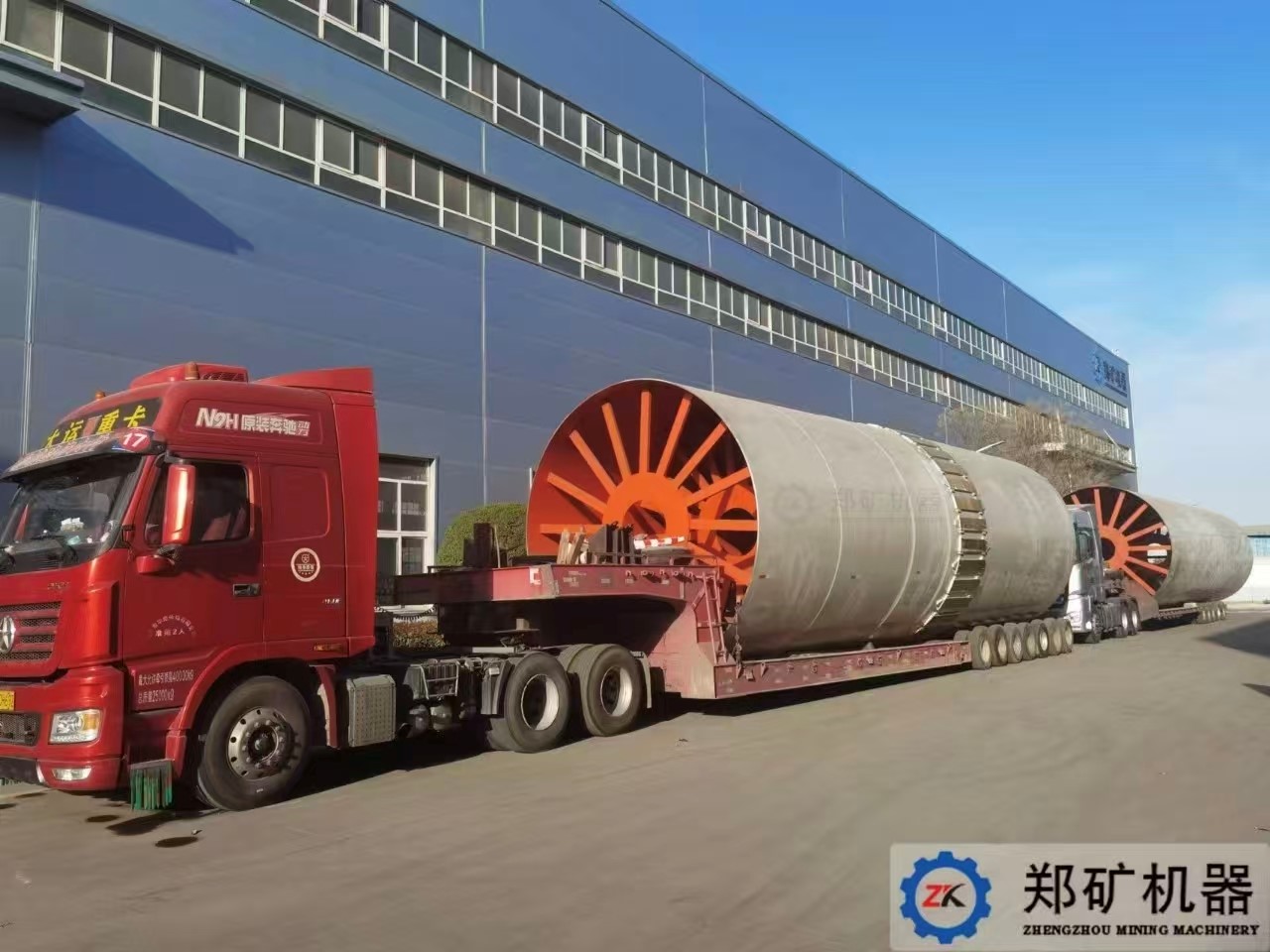
Rotary dryers are divided into concurrent flow type and countercurrent flow type.
Concurrent flow means that the air flow (referring to the hot flue gas as the drying medium) and the materials move in the same direction inside the dryer; countercurrent flow means that the air flow and the materials move in opposite directions inside the dryer.
The advantages of the concurrent flow rotary dryer are strong material dehydration, high drying rate, and relatively low final temperatures of both materials and the medium; the disadvantages are uneven drying rate, the final moisture of materials being limited by the final humidity of the medium, and high dust content in the medium.
The concurrent flow rotary dryer is suitable for drying materials with high initial moisture that allow intense dehydration, as well as materials sensitive to high temperatures or flammable materials, such as clay, slag, coal and other materials.
The countercurrent flow rotary dryer is characterized by uniform drying rate, low final moisture of materials and high thermal efficiency; it is suitable for drying materials that require very low final moisture but cannot undergo intense dehydration, or materials insensitive to high temperatures, such as sand and limestone aggregates.