- +8618937185591
- +8618937185591
- ec19@zkcorp.com
- +8618937185591


Project Introduction
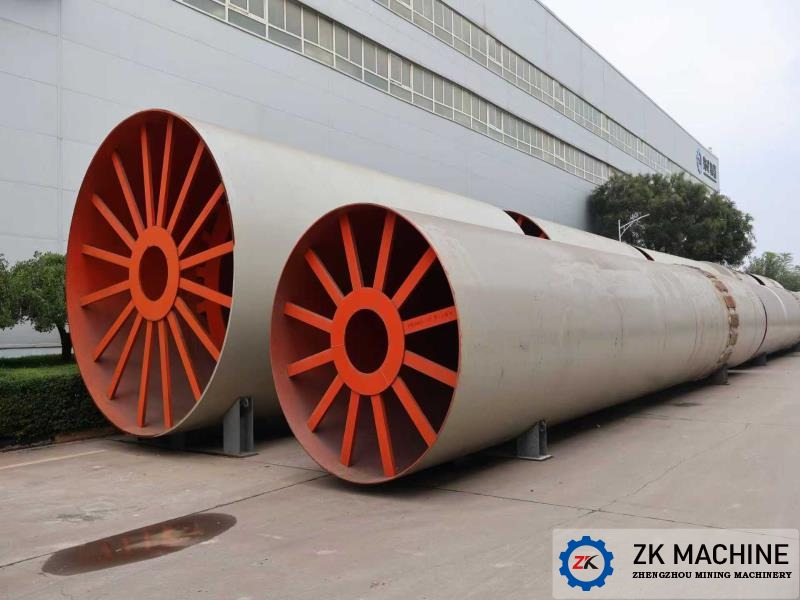
There is a mining company abroad that has a large amount of bauxite powder to dispose of. The bauxite powder contains a high content of AL2O3 and a low content of Fe2O3. These bauxite powders are filtered to form a filter cake, which needs to be calcined in a rotary kiln to produce refractory materials.
Project Solution
The customer's production raw materials have the characteristics of high surface water content and high loss on ignition. The customer is concerned that high fever may cause porosity issues and interfere with the strength of the pellets. Through multiple experimental demonstrations, Henan Zhengzhou Mining Machinery Co., Ltd. adopts high-temperature calcination, and the material will enter a severe sintering stage. Through the joint action of various mechanisms such as grain growth, grain boundary migration, and liquid phase formation and filling, these pores can be effectively eliminated, ultimately obtaining high-density and high-performance clinker. This solution will effectively help customers solve difficulties and pain points.
Project Implementation
The bauxite filter cake from the previous process is transported to the box feeder, which can be variable frequency speed controlled to evenly transport the material to the belt conveyor. Then it enters the double shaft mixer for mixing and dispersion, and then falls into the mud mill for granulation. The outlet of the mud mill is equipped with a cutting knife, which can adjust the length of the discharge. Then, the moisture of the particles is dried in the mesh belt dryer, and the dried bauxite particles are transported to the double-layer double door heavy hammer lock valve through the large angle belt conveyor. The lock valve can prevent cold air from entering the flue gas treatment system.
The material is slid from the kiln tail into the calcination kiln through the kiln chute, and as the kiln body rotates, the material continuously flips and slowly moves towards the kiln head. Then it enters the cooling machine for cooling, and the cooled materials are stacked in the finished product yard. The fuel is natural gas, which is sprayed into the kiln and burned to form a high-temperature flame. The hot flue gas flows against the material flow towards the kiln tail.
The hot flue gas from the tail of the calcination kiln is pre dedusted by a cyclone dust collector, and then enters a mechanical air cooler for cooling. Afterwards, the hot flue gas is sent to the mesh belt dryer by the booster fan as a drying heat source to dry the bauxite particles. The dried flue gas enters the bag filter for fine dust removal, and then is discharged to the chimney by the induced draft fan after fine dust removal. When the inlet temperature of the bag filter is too high, open the electric regulating cold air mixing butterfly valve and mix cold air into the flue gas pipeline to protect the filter bag from being burned.
Henan Zhengzhou Mining Machinery Co., Ltd. possesses a professional technical team with expertise in customized design tailored to client requirements. The company effectively addresses critical operational challenges and delivers significant economic benefits
Fast, professional and reliablewe provide you with services throughout the product ...

Email
ec19@zkcorp.com

Whatsapp
+8618937185591
Fast, professional and reliablewe provide you with services throughout the product . you with services t


