- +8618937185591
- +8618937185591
- ec19@zkcorp.com
- +8618937185591


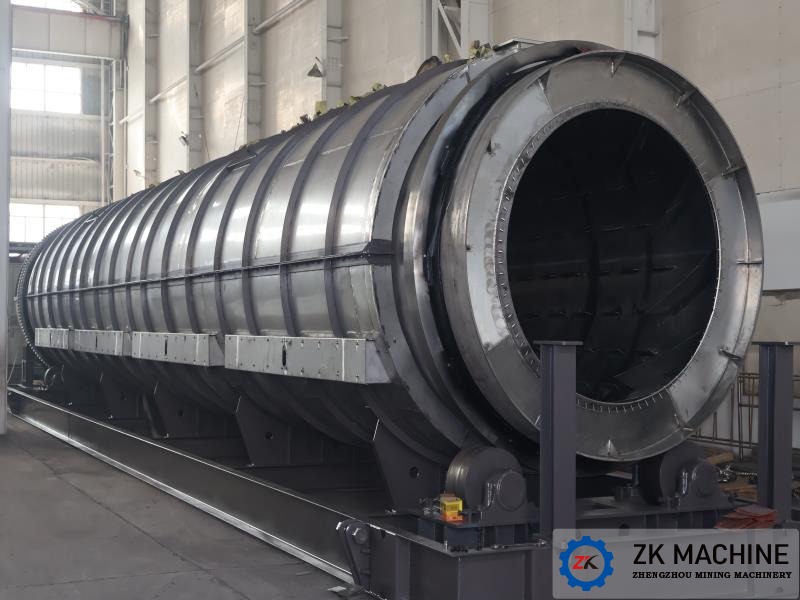
Electric Heating Rotary Kiln Thermal Separation Process for Electrode Sheet Recovery
Core Objective:
To use high temperature to decompose or deactivate the binders on the positive and negative electrode sheets, thereby detaching the active materials (cathode materials such as lithium cobalt oxide, NCM (nickel-cobalt-manganese), lithium iron phosphate, and anode graphite) from the aluminum foil (cathode current collector) or copper foil (anode current collector).
1. Preparation
The core of this stage is to create an oxygen free, sealed environment for the thermal treatment, preventing oxidation/combustion of the aluminum foil or loss of graphite due to oxidation.
System air tightness check: Inspect the air tightness of the rotary kiln barrel and the front/rear end sealing devices (dynamic and static seals) to ensure that the nitrogen atmosphere does not leak and that air does not infiltrate.
Start kiln tube drive: Start the motor and set the kiln tube rotation speed (typically low speed, e.g., 0.4–2 r/min), ensuring smooth rotation without abnormal friction.
Nitrogen purging and displacement: Start the nitrogen system and perform a high flow purge inside the kiln barrel.
Purge until the oxygen content inside the kiln is below 0.5%. This removes air, prevents oxidation/combustion of the current collectors (Al/Cu) during subsequent heating, and avoids hazards during binder cracking.
Heating: Turn on the heating system and set the process temperature (350 °C – 500 °C). This temperature range is suitable for decomposition of PVDF or other binders, while remaining below the melting points of aluminum and copper foils.
2. Feeding and Thermal Treatment
When the temperature is stable and the oxygen content meets the requirement, the continuous production stage begins.
Feeding: Start the front end conveying equipment to feed the shredded electrode sheets (or whole electrode pieces) into the feed hopper.
Key point: The feed hopper is usually connected to a displacement (replacement) chamber. Before entering the kiln tube, the material must undergo secondary nitrogen displacement in the displacement chamber to prevent air from being introduced through the feed inlet, which would compromise the oxygen free environment inside the kiln.
Thermal decomposition inside the kiln:
After entering the rotating kiln tube, the material tumbles continuously with the barrel rotation, ensuring uniform heating.
Reaction control: Adjust the kiln tube rotation speed and the barrel inclination angle to control the material residence time inside the kiln.
Physical changes:
Cathode sheet: The PVDF binder decomposes, and the cathode material (black powder) detaches from the aluminum foil.
Anode sheet: The binder for the anode graphite and copper foil decomposes, and the graphite peels off from the copper foil.
Atmosphere protection: Nitrogen is continuously introduced throughout the entire heating section to maintain a slight positive pressure. This not only prevents air backflow but also acts as a carrier gas, transporting organic waste gases and HF gas generated from binder decomposition out of the kiln promptly and into the exhaust gas treatment system.
3. Cooling and Discharge
To prevent oxidation/combustion (especially of copper foil and graphite) when the high temperature material contacts air at the discharge outlet, forced cooling must be performed in an oxygen free environment.
Indirect cooling:
The material enters the cooling section of the rotary kiln. The outer wall of this section is equipped with water spray or a water jacket for cooling, while the interior of the kiln tube must still maintain a nitrogen atmosphere.
The material temperature needs to be reduced to below 80 °C to ensure safe discharge.
Discharge:
The cooled material is discharged through the discharge box. The discharge box is also equipped with sealing devices to prevent air ingress.
The material composition consists of: powder (cathode active material or anode graphite) + aluminum foil fragments or copper foil fragments.
4. Post treatment (Auxiliary Process)
The material exiting the kiln typically requires further processing to separate the graphite from the cathode material.
Sieving:
Use vibrating screens (e.g., linear vibrating screens or circular vibrating screens) to separate the larger pieces of aluminum foil and copper foil.
The remaining powder mainly consists of cathode materials (e.g., lithium iron phosphate, NCM) and graphite.
Fast, professional and reliablewe provide you with services throughout the product ...

Email
ec19@zkcorp.com

Whatsapp
+8618937185591
Fast, professional and reliablewe provide you with services throughout the product . you with services t


